
One day, a little over ten years ago when I was feeling suicidal, I was explaining to my sister and her husband my rationalization for it being perfectly okay for me to commit suicide. I was sharing how I had realized that if I killed myself, everyone would move on and be fine. People die every day, I said. People move past these things all the time, I explained. I was so deep in my own misery that I then went on to say one of the most cruel and hurtful things I ever remember speaking out loud. You see, my brother-in-law’s little brother had recently died in a car accident. He was  a teenager or at the most in his early 20s when he died. In my utter narcissistic despair and obliviousness, I proceeded to point out to my brother-in-law that obviously he had moved on from the death of his brother, and that that was the proof of my undeniable logic. A deafening silence followed. My sister glanced at her husband. Then she locked her eyes on mine, and I’ll never forgot what she said to me: “Yes, people move on. But nothing is ever the same again. Their lives are changed forever.”
Those words and the energy behind them pierced through the veil of my despair to shake me awake. Needless to say, I didn’t commit suicide. But more than that, never again did I trivialize the depth and breadth of what we experience as human beings in this life, including the deepest grief, despair, and pain. The experience of loss, for instance, is not trivial simply because all of us must endure and move through it at some point in our lives. In fact, the experience can be utterly transformational in the most horrendous and most beautiful ways. Indeed, we will never be the same again.
Recently I ran across an article written by Mark Sandlin called, 10 Clichés Christians Should Stop Saying. Some of these clichés are said by more than just Christians and are generally used in an attempt to comfort ourselves or others going through a challenging experience:
Everything happens for a reason.
God (the Universe) never gives us any more than we can handle.
We could debate (endlessly) whether or not these statements are even true. But more important is how these statements are often used as a subtle way of trivializing our own or another’s experience. I cannot tell you how often people start to share with me the depth of their pain only to stop themselves with a “but” followed by a version of one of these statements. Another common sentence to follow the “but” is, “I’m seeing this as an opportunity for growth.”
It is fantastic to see that everything happens for a reason, or that we can handle whatever is in front of us, or that every situation is an opportunity for growth and evolution. But when we start to use these ideas as subtle ways of avoiding and trivializing our own pain, then we are bypassing the very path we must travel to grow, transform, and heal in the most profound ways.
What is needed for true transformation and healing is the capacity to hold and feel fully both sides of this coin — both the horrendousness and beauty, the pain and the transformative power, the grief and the love. A friend of mine once shared that she calls these situations AFOGs — another f*%&ing opportunity for growth. I love this because the f-bomb acknowledges the pain of the situation, and “opportunity for growth” speaks to the transformative potential. I find that all too often, we want to leave out the f-bomb. We want to avoid the pain at all costs. But when we do this, we are denying an aspect of life itself. As Vera de Chalambert says:
“We must not send suffering into exile — the fear, the heartbreak, the anger, the helplessness all are appropriate, all are welcome. We can’t dismember ourselves to feel better. Difficult feelings need to be given space so they can come to rest. They need contact. We can’t cut off the stream of life and expect to heal.” ~From Kali Takes America: I’m with Her
The capacity to be fully present with both the pain and the inherent transformative power in these situations is often not easy. It takes an ability to differentiate and dis-identify from powerful energies which can be so overwhelming and all-consuming that we literally think they are us. For me, this is a journey. It is a continual discovery that pain and transformative power are often inseparable. It is a journey I embrace because, in that moment when my sister looked me in the eyes, I decided to live.



 You probably know by now the power of gratitude. Everything seems lovely when you are enveloped in gratitude. You may even keep a gratitude journal or have engaged in other practices to help you feel gratitude every day. If you’ve committed to any of these practices and you’re like many people, you’re probably noticing significant improvement in your overall sense of well-being. After all, consistently feeling and experiencing gratitude is life changing!

 When you are in crisis, the very idea that a gift lies within the experience can seem absurd or even offensive. What is the gift in receiving a life-threatening or debilitating diagnosis? How can there be a gift within being suicidally depressed or the experience of uncontrollable panic attacks? When you are the one in crisis, I have personally found that to be the most difficult time to see the gift. Of course, it is much easier to see the gift as an outsider. In fact, you will no doubt have at least a few people trying to comfort you with age-old clichés such as, “Well, you’re learning something, aren’t you?” or “Every cloud has a silver lining,” or “Don’t forget, everything happens for a reason.” In the midst of a healing crisis, not only can these tired clichés utterly fail to comfort us, often they enrage us because we feel completely unseen in the immensity of our pain by those whose profess to love us.


 myself for no reason other than I am committed to living in love, or I could choose to continue to hate myself. It really was that simple. And, choosing love in that moment was quite possibly the hardest choice I have ever made.
 others. I also know that my true heart’s desire is simply to give and receive love more and more fully, When I can face head on what I am most ashamed of in myself and still choose love, I can face anything in anyone else and choose love with them as well. For when I am totally honest, I notice that I carry all those qualities that I have condemned in others within myself. This, I believe, is one of the most important keys to healing ourselves and our planet.


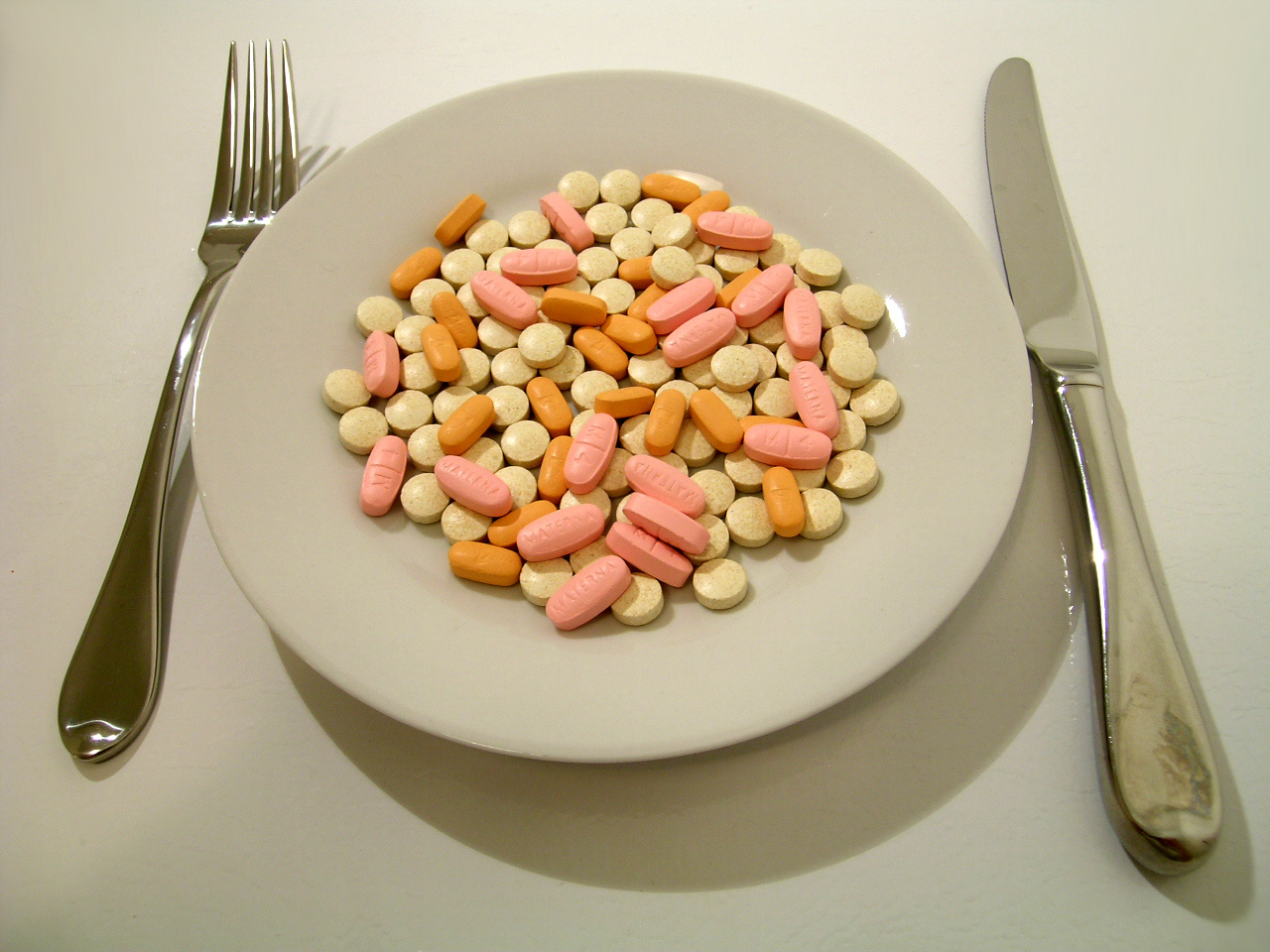
 with different nutritional approaches and actually became quite obsessed with “eating right.” I was approaching it from a fear-based perspective, and I can see now that my beliefs/intentions were in opposition to my health. Even though I was eating foods like veggies and such, I actually became less and less healthy physically. It became clear to me that my belief structures and intentions were affecting my ability to heal even though I was eating nutritious foods. (And, of course, there are probably other factors as well.) Yet, at the same time, imagine if I had approached eating with the same fear-based perspective but instead ate donuts and Doritos all day long. I would imagine that would have been even worse on my physical body because the nutritional and energetic content of the food does actually make a difference as well. Other factors related to intention would be how the food was grown, who was growing it and with what intention, who harvests the food and with what intentions, who handled the food on the way to the store, what the atmosphere was like in the store, etc. All of this, along with my own beliefs/intentions, combines into a complex package of what makes up that food and how it affects me.



 Penny Heiple, Evolutionary Healing
